
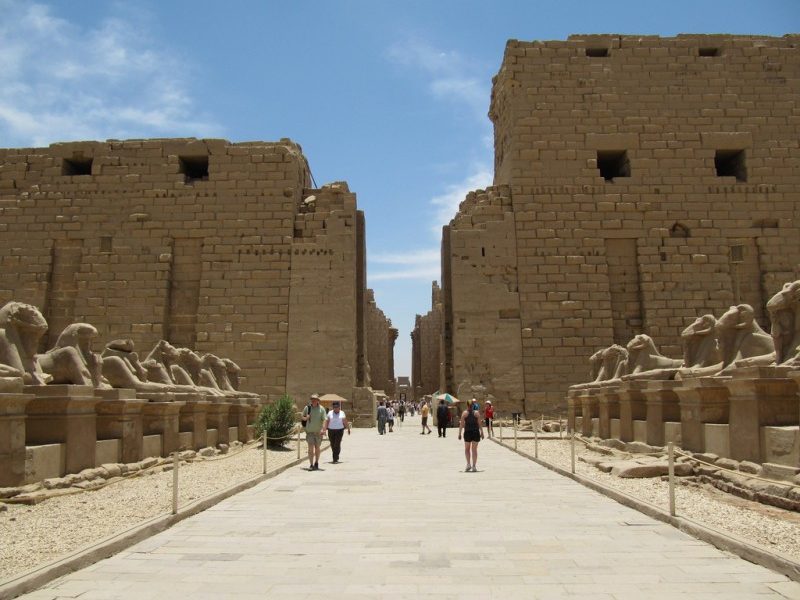
Karnak Temple: A Celestial Gateway to the Soul of Ancient Egypt
Amid the golden sands of Luxor, the Karnak Temple stands as more than an archaeological wonder—it is a profound narrative of humanity’s search for meaning and connection with the cosmos. Unlike many temples of antiquity, Karnak is a living testament to the spiritual ambition and artistic mastery of ancient Egypt, blending grandeur with symbolism in every corner.
A Symphony of Pharaohs and Stone
What makes Karnak truly unique is its collaborative essence. Over 2,000 years, more than 30 pharaohs contributed to its construction, each adding their voice to a symphony of stone. Unlike the singular vision often seen in monuments, Karnak is a dynamic tapestry reflecting the evolution of Egypt’s art, politics, and religion.
Visitors today can witness the seamless integration of architectural marvels like the soaring obelisks of Hatshepsut and the colossal statues of Ramses II. These additions are not mere decorations; they are declarations of divine authority and eternal legacy, carefully designed to inspire awe and reverence.
A Journey Through the Great Hypostyle Hall
The Great Hypostyle Hall is perhaps the most iconic part of Karnak Temple, but few realize it was also a place of profound sensory engagement. The towering columns, carved with scenes of offerings and celestial maps, were aligned to mimic the papyrus forests along the Nile, creating an atmosphere of both majesty and intimacy.
This interplay of light and shadow was not accidental. As sunlight filtered through the stone “canopy,” it illuminated the carvings in a way that made the divine stories come alive, connecting worshippers to the gods they sought to honor.
Cosmic Alignments and Spiritual Significance
Karnak is not just a temple; it is a celestial clock. Its layout aligns perfectly with the rising and setting sun during solstices, reflecting the ancient Egyptians’ advanced understanding of astronomy. This connection to the heavens symbolized the balance between the earthly and the divine, reinforcing the concept of ma’at, or cosmic harmony.
The Sacred Lake, another unique feature, was not merely a decorative element but a tool for astronomical observations and a place for ritual purification. Priests used its still waters to observe celestial reflections, further linking the temple’s activities to the movements of the stars.
Karnak Temple in Modern Times: A Timeless Inspiration
Today, Karnak Temple continues to inspire artists, scientists, and travelers from across the globe. Its preservation is a testament to its enduring significance, and ongoing excavations promise to reveal even more of its mysteries. Modern technologies, like 3D mapping, allow researchers to reconstruct the temple’s original splendor, offering fresh perspectives on its architectural genius.
For visitors, the Sound and Light Show transforms Karnak into an immersive narrative, where the stones themselves seem to speak, sharing tales of gods, kings, and cosmic order.
Why Karnak Temple Matters Today
In a world dominated by transient achievements, Karnak Temple stands as a reminder of the enduring power of collective vision and spiritual aspiration. It is not just a monument of the past but a mirror reflecting humanity’s timeless quest for meaning, connection, and legacy.
Karnak teaches us that true greatness lies in the ability to harmonize art, science, and spirituality—a lesson as relevant today as it was thousands of years ago.
Exclusive Elements:
- Emphasis on Karnak’s sensory and symbolic experiences (light, sound, cosmic alignment).
- Analysis of collective contributions from multiple pharaohs.
- Exploration of the Sacred Lake as a tool for astronomy.
- Karnak as a modern inspiration and its relevance in today’s world.




LUXOR - Luxury Tours Egypt
[…] any pharaoh ruled Egypt,another shrine for Philip arrihedios the brother of Alexander the great in karnak temples […]